Gibt es Menschen auf dieser großen, weiten Welt, die einen besonderen Draht zu uns haben? So etwas wie Soulmates, Seelenverwandte? Ich glaube ja. Und du?
Entgegen der romantischen Annahme, es gebe nur einen einzigen Seelenverwandten, bin ich überzeugt: Es sind mehrere.
In den letzten Jahren habe ich auf verschiedenen Kontinenten gelebt und gearbeitet. Und immer wieder – selten, aber regelmäßig – ist es passiert: Ich treffe jemanden, und ohne rationale Erklärung passt einfach alles. Wir schwingen auf derselben Frequenz, sprechen dieselbe Sprache – oft ohne Worte. Wir lachen an der falschen Stelle und finden genau das witzig. Wir tun Dinge, die anderen seltsam erscheinen, uns aber völlig normal vorkommen. Wir teilen Werte, ohne sie jemals abgesprochen zu haben.
Doch das Faszinierende ist: Wir sind nicht gleich. Ganz im Gegenteil. Wir sind uns fremd genug, um uns herauszufordern, neugierig zu machen, wachsen zu lassen. Wir erweitern einander die Horizonte. Diese Verbindung ist irrational – fast verrückt.
Yuval Noah Harari würde jetzt vermutlich sagen: „Das ist nichts Mystisches, sondern ein evolutionärer Zufall. Eine komplexe neuronale Interaktion verstärkt durch geteilte soziale Prägungen.“ Möglich. Und doch fühlt es sich an wie mehr als das.
Wir sind aus der Ewigkeit geboren und leben einen Wimpernschlag lang. Und da, mitten zwischen Geburt und Tod, begegnen wir einander. Genau in diesem Moment, an diesem Ort – wie ein neuer Stern ⭐️ am Nachthimmel. Die meisten dieser Sterne leuchten nur schwach. Doch einige? Einige erhellen den ganzen Himmel.
Manche von ihnen heiraten wir und verbinden uns für immer. Andere ziehen vorbei oder bleiben als treue Freunde, weise Mentoren oder verlässliche Kollegen. Doch eines haben sie gemeinsam: Sie prägen uns – und lassen uns nicht mehr los.
Ist es vielleicht Gott, der seine Menschen so in der Welt verstreut, dass sie sich genau dann begegnen, wenn es passt? Wenn alles stimmt – dann funkt es. Dann erfasst uns diese tiefe, allumfassende Liebe, von der die Bibel spricht.
Diese Menschen können aus Asien oder Lateinamerika kommen, aus Berlin-Mitte oder Wolkendorf bei Kronstadt. Sie können älter oder jünger sein, Mann oder Frau. Wenn es passiert, sollten wir die Frequenz hochdrehen, staunen und genießen. Ein neuer Stern an unserem Himmel – er wird dort leuchten. Vielleicht für Jahrzehnte.
Und auch wenn der Alltag uns wieder einholt, wenn das Licht des Morgens die Sterne verblassen lässt – wir wissen: Sie sind da. Ihre Erinnerung bleibt in unserer Seele.
Was für eine wunderbare Perspektive, um offen und empfangend in diese große, weite Welt hinauszugehen!
Und falls du dich jetzt fragst, ob du vielleicht einer dieser Menschen bist, die auf meiner Frequenz senden… 🤔 Die Antwort kennst du doch. 👋
I’m an Australian. That’s so unusual to say. Still. I am.
I am what you call a new Australian.
I MADE Australia my home. And this home is a unique place in this world.
So, being here, living here, what makes Australia, Australia, what is “The Spirit of Australia”.
Let’s find this out together in this mini-series. What’s the “Spirit of Australia” for me, in my context?
Wherever you live in Australia
Whatever time of the year you visit Australia,
there is one crazy thing going on. THE WEATHER.
The weather is unique to this unique continent.
Most of the Country is just dry.
HOT
BURNING HOT
When the sun shines during Sommer, you feel it.
And you can spot innocent tourists by their RED sunburned skin.
Australians are SunSmart.
HAT, SUNSCREEN, and UV clothing.
That’s how you gear up if you plan to stay in the sun.
No sunbathing. No browning or tanning.
You are staying safe. The statistic of Australians getting skin cancer is among the highest in the world.
But if you live in Melbourne, no matter how hot it is today, do not store away your winter clothes because you will need them tomorrow when the temperature falls back from 37 to 16 degrees. This often happens here in the south when a cold, Southpole blast comes from the south sea and brings along rain and winds.
The winter in victoria is cold and wet.
We even have snow, something most people don’t know about Australia. I did not, and I know many Europeans do not know this. The general knowledge is that Australia is warm and a tropical paradise.
What Else did I experience in my time here:
Strong winds with trees falling, branches breaking, one fell on my car once,
Hail storm
extreme temperature changes
flash-flooding, I experienced this in my neighbourhood.
Super, asphalt melting, hot burning summer weather with upwards of 45 C.
Bushfires due to this hot weather
muddy rain
That’s what I experience from the weather spirit of Australia.
But the Country is big. It is a continent the size of Europe.
So the weather varies a lot from region to region.
It is:
hot
very hot
hot humid
hot very humid
regions with cyclones,
flashfloods
drought
and the desert.
That’s the Spirit.
Like in every Country
the weather plays a big part a
and has a significant on how people
animals
plants
life as well as culture in general.
That’s why the weather is on my list of things that make the “Spirit of Australia”.
Writing is hard! Speaking in public is a nightmare!
Yet it’s something everyone should learn and everyone should do.
That’s all feelings every writer and speaker makes. But it’s doable. I would argue that it’s a life skill—something we never finish learning. So I wrote and gave a speech a week for 13 years. Here is my experience.
Author, psychologist and speaker Jordan Peterson says about writing: “People who spend time writing carefully about themselves become happier, less anxious and depressed and physically healthier. They become more productive, persistent and engaged in life. This is because thinking about where you came from, who you are and where you are going helps you chart a simpler and more rewarding path through life.”
This passage speaks to me and reflects my own experience in so many ways. Yet writing is so hard. It requires so much effort, concentration, energy and thought.
It is hard to know the grammar and write correctly.
It’s hard to express thoughts.
And I often wonder how many people have this habit? Do people do that: Sit and write?
If not, it would be the most critical thing we can start doing right now. How many personal stories, how many insights, how much knowledge and life experience just remain unspoken and unheard. Everyone has a story to tell. And there is something to be learned from each experience. We have the technology to write and, most importantly, make everything searchable. We can capture and organise human knowledge for the next generations. And I think we should. In addition to that, the personal benefits of writing are obvious.
Writing and holding a speech are not the same but very similar. Learning what I wrote and remembering what I put to paper happens through speaking it out loud. Holding and giving a speech is an entirely different beast of a job equally complex. Combining them, in my experience, is helpful.
Of course, not all writing is intended for speech because writing a speech is different from writing for someone who will just read it. But, having to give an address force you to write even when you don’t want. It forces you to finish the script, the speech, the lecture, and the thought that otherwise might not be finished.
Since I started to work as a minister of religion, I had to do both, frequently more than just once a week. I was writing for different publications in different formats. Sometimes more academic, journalistic or reporting about an event. Other times I was writing a thoughtful speech to touch hearts and minds. In my case, this never came to me easily—neither the public speaking part nor the writing.
I remember at school; I was terrible at both. And for a long time, I had a problem with it. Some kind of imposter syndrome. But putting myself into a particular setting gave me the necessary boundary to keep doing it, repeating it and getting better at it. So that is my number one thought of this video:
Set the scene!
That’s one of the most important lessons. You will if you have to. Often there is a different pressure involved. It’s very different when I have a deadline and need to write or finish something versus I want to, and it would be nice to write that story. So, if you wish to be better at writing and speaker, say “yes” to opportunities to do so. There are so many ways you could do that. Volunteering is a great way. Volunteer to write an article in your community group, the internal newsletter, or your local publication. And say “yes” to speaking opportunities. Not to show off, network and get something out of it other than simply giving the best speech you can. At a birthday party, wedding or family celebration. How often is there an awkward silence when the question is asked if anyone here would like to say a few words?
Make a habit out of writing
Having a deadline is essential too. Writing a speech a week was, for me, a process. It became a habit. That’s the second thought. Make a habit out of writing. In my case, every week. In your case, it could be a weekly newsletter. A weekly video. A weekly meetup. Whatever it is: It has to be regular. Because if it is, we form a process around it.
In make case, at the end of the 13 years, I had a clear structure for the week: Around an hour a day for Two- Three days, read around the topic I was supposed to talk about, making notes and doodles. Another day of more intense research and one day of writing the speech. Rehearsing one day and giving the address the next day. The dream. Of course, sometimes it was not like that. Other commitments made it hard to keep that structure, but I still would aim for it. It was the result of a long learning process I am sharing with you.
During those 13 years, I had all kinds of experiences. I remember once writing and finishing a speech an hour before my speaking engagement. Packing up, rushing out and when I got there, opening my bag, I realised I did not have that speech with me, it was in the printer. Total blockage. Blank slate. What did I write? What did I want to say? I did not rehearse it. I did not read through it a second time, nor did I memorized any of the points. Horrible.
I gave the speech, and it was not good. But an experience like this ends up in a meaningful conclusion. I will never put myself in that situation again. Embarrassing!
Other times, I lost pages or got the order wrong after it fell on the ground. I read quotes I did not understand. Or I did just read and did not hold a speech. I am terrible at grammar. Yet many mistakes can be omitted and jotted out if you carefully read through a few times.
At the end of it, I never felt like I’m done. I am NOT great at writing and speaking. But, for me, it feels somehow just the same. I am still excited when it’s time to hold a speech. I still think the article could be better, or it’s not done, or it has mistakes I did not see or is not good enough.
I could do better.
Frequently I am still not happy with the outcome. But I have a deadline. I have Nr. 1. Set the scene. And I have an Nr. 2 Habit that helps systematically. That’s what I learned from a speech a week for 13 years. Set the scene and build a habit. Make it necessary for you to write and to speak, and that’s how you keep consistent, get better and improve over time.
“Everyone can make it.” “Work hard enough and you will be successful.” “And if you are not successful you did not work hard enough.” That’s how most people think. But this thinking brings forth a problem called the:
Meritocratic hubris
This is the tendency of winners to be too proud of their success. To forget the luck and good fortune that helped them on their way. “It’s the conviction of those who land on top that they deserve their fate.” That there is no other reason for their success other than their hard work. This is of course not true. There is always a bit of luck involved and circumstances we have no control over like: time, location, education, parent wealth, physical health etc.
By implication, according to the meritocratic hubris, those on the bottom deserve their fate. It’s solely their wrongdoing and their fault. They did not work hard enough, they did not make it. They deserve it. “The idea that everyone is exposed to a certain kind of fate, by the grace of god or sheer luck makes room for compassion. A perfect meritocracy banishes all sense of gift or grace or luck; it diminishes our capacity to see ourselves as sharing a common fate. And so, it leaves little room for the solidarity that can arise when we reflect on the contingency of our talents and fortunes.” This is what makes merit a kind of tyranny.
The Tyranny of Merit
Based on the book, the Tyranny of Merit by Michael Sandel, who teaches political studies at Harvard University, we uncover many causes for the current state of democracy. As we are in an election year here in Australia but also because of the challenges to democracy posed by the pandemic and the rise of political partisanship, we need the identify the problem and find achievable solutions. What’s the future of democracies? For Sandel it is a future in which we have:
equality of opportunity in a democracy of humility.
Equality of opportunity
Equality of opportunity you might think is already part of our society. But if you look closer it’s not. Over decades people from different economic backgrounds have less and less common ground. They live in different suburbs, go to different schools and have different cultural, educational and financial possibilities which in turn creates a sense of disconnection. Although free democracy promises equality of opportunity in reality this is less and less true. Children from lower-income families do not have the same opportunity as others who visit elite schools and enjoy private tuition. This hopelessness creates in return frustration and resentment. “Why try when failure is certain?” Recent developments show for example that children in the USA will be worse off than their parents. Just as in Australia most young people can’t afford to buy a house like their parents realistically hope to be able to do.
In human history, there was always a gap between the rich and the poor. The kings and noblemen and the peasants and common folk. But, even that gave room for humility and compassion. Because the rich knew they were born into it and the poor had to live with their fate. In a meritocracy, there is no room for compassion because the poor are poor because of their own fault and the rich can feel entitled because it’s their earned right.
“Seen from below, the hubris of elites is galling. No one likes to be looked down upon. But the meritocratic faith adds insult to injury. The notion that your fate is in your hands – that you can ‘make it if you try’ – is a double-edged sword, inspiring in one way, but discriminatory in another. It congratulates the winners but denigrates the losers – even in their own eyes. For those who can’t find work or make ends meet, it’s hard to escape the demoralizing thought that their failure is their own doing – that they simply lack the talent and drive to succeed. This gives rise to a politics of humiliation.
It combines resentment of the winners with nagging self-doubt. It’s a potent ingredient in the volatile brew of anger and resentment that fuels populist protest.”
Democracy of Humility
To reinvigorate democratic politics, we need to find our way to a morally more robust public discourse; says Sandel. “One that takes seriously the corrosive effect of meritocratic striving on the social bonds that constitute our common life.” “If the common good can be arrived at only by deliberating with our fellow citizens about the purpose and end worthy of our political community, then democracy cannot be indifferent to the character of the common life. It does not require perfect equality but it requires that citizens of different walks of life encounter one another in common places. It leads to a more generous and compassionate society where even those who are not fortunate enough, who do not make it, have a place to live and be heard.
Is that a good solution? Is that a way forward? And if it is, in which political Agenda and which political party do we find this proposition. And if we do not find it how can we influence the next government and politician to devise the necessary policies? What would be the alternative solution?
Let’s discover five things we can do to make better decisions and avoid decision fatigue
Did you hear about decision fatigue? I came across this formulation a long time ago, and I always asked myself if it was true. Do we get fatigued because we make too many decisions? It’s not like our mental power would run out. It is not like we could not go on to make decisions, or does it?
Yet, there are so many easy examples that come to mind which illustrate this point.
Think about:
shopping without buying
flights or vacations not booked because there were too many choices
renint a hous is a terrible proces (usually)
coupon expired
That’s called the paradox of choice. The more options we have, the more difficult it becomes to choose and be happy about it. We fear making the wrong choice and are not satisfied with whatever choice we make.
Perhaps we can think alongside Daniel Kahneman’s ideas from his book “Think Fast and Slow” one of whihc is: we do many things in an automated. We spend almost all of our daily lives engaged in System 1 (Thinking Fast). We engage System 2 (Thinking Slow) only if we encounter something unexpected or make a conscious effort.
To avoid decision fatigue, we need to have good habits and systems. I think this fits perfectly into this idea of dealing with most of our time and tasks and aspirations through habits and systems. Not relying on our willpower, not on intention, not on a decision, may it be conscious decisions or decisions we make unconsciously, even worse. Habits and Systems take away a lot of unhealthy mindlessness. Of the chaos of our brains and keep our inner procrastinators at bay.
What can we do?
We automate things in our lives so that we do not need to make decisions about those things. (for example, A LIST GOOD HABITS). We spend most of our time, System 1, in a well prepared, organised system of intentional habits that lead us in the direction and future we want to rather than the one we might end up in by chance.
Five things we can do to make better decisions and avoid decision fatigue
make better decisions in the morning or after a break
I promote genuine curiosity and interest in other people. I want to encourage conversation for the sake of interacting with someone else.
Why does almost everyone today, especially those who seem to be friendly, interested and motivated in conversation have a Hidden Agenda in the sleeve that’s pulled out once you are hooked in a seemingly genuine conversation?
There is nothing more frustrating and disappointing than having that AHA moment during a talk with someone: “Aha, that’s why you invited me to lunch?” Do you know those surprising moments? “Aha, and all this just for asking if I can…” It’s so disappointing! “And I thought this friendly person was just interested in having a discussion, how stupid from me.”
Disguising our real intention
Why can’t we have a genuine conversation? A conversation without the hidden Agenda. One without a secret product in the pocket and every so important marketing for the “Me” business.
It seems that the interaction with other people today has become a charade of friendliness disguising our real intention to sell something to a possible buyer. It feels to me like being on a real-time Market-platform, Amazon in real life, where everyone is trying to pitch you something.
No need to network all the time
Networking, the exchange of information and ideas among people with a shared profession is conquering all conversation. Its exactly that, having “an agenda” and finding a fancy justification for it. Why do all encounters have to have an outcome? an aim? Interaction with other people can be based on a common interest or based on a situation may it even just be sharing a waiting room at your GP. You don’t need to advance your Agenda there.
Why not merely having a conversation without a “positive outcome”? Just a talk between two people sharing their thoughts, ideas, feelings or having a discussion about a topic. Not a planned conversation with an expected topic or “agenda” to go through. Do you remember such a conversation? I am sure you do because many of those conversations are important.
With this short article, I promote genuine curiosity and interest in other people. I want to encourage conversation for the sake of interacting with someone else. A real encounter, an in-depth discussion and intention to listen and understand the other person’s perspective.
I am tired of encounters with an Agenda, where I am just a potential client, a consumer or a step to something else for self-gain. Whatever your Agenda is, stop it! Not today. For once, be yourself, without being afraid to be wrong or right. Let us learn from each other and build on ideas. Who knows our conversation can be life-changing.
“If you want to go fast, go alone; but if you want to go far, go together.”
African proverb
The coronavirus pandemic has not only affected countries and continents but also our family; Working at home, homeschooling and having the spouse 24/7 at home had test families resilience and patience. Statistics show an increase in family violence, mental health and drug and alcohol problems.
There are several news and reports about a spike and dramatic increase in “divorce boom” and divorce and relationship services growth.
For many marriages, relationship and families, this is a challenging year. We have been stuck at home and stip away from many of our relationship with friends and family and coworkers. We rely almost exclusively on our partner to take on these several roles. At the same time, we might feel guilty feeling annoyed, distanced and frustrated with our relationship, especially now in a time of crisis when we actually should find encouragement and support.
But how can you maintain a healthy marriage during this time that consumes all our energy and brakes us emotionally? We are going through a pandemic, that pushes us to our limits mentally, financially, and as a couple.
So here are a couple of tips for you.
Be Kind to yourself and your spouse.
Accepting the ups and downs of each other. Each of us will have experienced this time; differently, some will suffer more; others will have more understanding and go through this time without fighting or arguments. Accept the partner’s feelings and ways to cope with the situation.
Create memorable moments of intimacy
Even during the time of isolation, it’s essential to find moments to have a conversation without children running around. Perhaps a walk in the backyard or staying a little longer in bed and cuddling with your partner. Maybe staying up a little bit longer than your children and make room for a quiet conversation. Perhaps just a silent moment to build trust and rediscover yourself and your partner. Express love, compassion and understanding as often as possible, especially if you see any signs of fatigue. You are after all each other’s cheerleader and uplifters and motivators.
Train your body and mind.
Staying all day long at home will affect your relationship. Slowly you both will not have much to speak about, and you will always have the same conversation. The boredom of the daily routine will find its way into your relationship. To avoid this, one strategy is to read more books, news and discuss ideas. Take on a project at home, and if you already finished everything you had planned look for a new one. Create small new goals for yourself, complete something in the garden, clean, organise your cupboard and practise more sport or music. Create habits rather than one-off projects that you can do regularly on your own and as a couple.
Express gratitude, make compliments and showing appreciation.
As not much is happening, you can fall into just thinking about what you can not do, what your missing, what you would do or buy when possible. Until restrictions are lifted try to see what you have today and around you, find every day something to say thank you, this will make you happier and value what you have instead what is not with you.
Speaking about gratitude, why not say something nice and surprising to your spouse, instead just to think about yourself, try it, it can get fun and usually you will get some of that back.
Loneliness and its many consequences are the more subtle but challenging effects of the Covid- 19 Pandemic.
Couples are fed up with each other, and family life has become so dull that not even hours-long TV binging is doing the trick of distracting us from reality. People do not have enough money to cover their daily lives. They can’t go to work or do anything meaningful outside their homes.
As a couple be more flexible, caring and understanding to what each one is going through. Be aware of what is happening around you and find strategies to go through this time in a healthy and solidary way.
If you are religious seek wisdom on your religious tradition
Remember the church service you celebrated on your marriage day? Perhaps the ceremony that was conducted? Maybe you seek advice from your spiritual leader. Or make a routine for yourselves to read together with your religious texts. What do they say about marriage and relationship? Having a spiritual moment together like a prayer, a song of worship, lighting of a candle etc. is an important moment for relationships.
Seek and get advice
Our last tip is to get advice as soon as you feel you need help. There are so many possibilities to receive support, yet we don’t. You should look for guidance and counselling, even if your relationship is great. I will help preventively. What often happens is that conflict escalates in such a way that separation and divorce are decision one side already made. You are then confronted with an already set and done situation. Advice and counselling usually help to prevent this situation and allow you to talk thing trough and find solutions together.
interesting Links:
Anna Demuth
Community Development | Social Inclusion | Case Management | Community Services | CALD Community | Family Services | Domestic and Family Violence| Compassion | Connect People|
Being human means being social. It means being in relationship with others. Humans are never alone. They can be alone for a while but they need basic human contact. The first and fundamental experience is living in a relationship with others. Think about a child. The first years are spent in close relationships with other people, being dependent on their care. We are social beings and that is our biggest strength. Today’s possibilities through online communication, unprecedented opportunities to collaborate, discuss and grow are endless, yet the biggest challenge is social isolation and its many severe consequences for individuals, like anxiety and depression.
Still, the community is the strongest force that can drive change. True, individuals always played their part too. We all know inspiring names and heroes, scientists and authors. People who changed the world and history forever. But we also know that power corrupts and leads to “brilliant” Tyrants and Kings who oppressed (in history) the majority of their followers and servants.
Through the rise of social media and connectivity now more than ever before the individual and his knowledge, skill, leadership, charisma, social skill and bliss or intelligence, are seen as the most desired traits. Influence and fame of the Individual are the pinnacles of success and the dreams of young boys and girls of our time. Still, it is the community where the true power lies. It is the tribe that makes things happen. It is the companionship that holds through difficult times. It is the group of coworkers or the group of friends who truly make a difference.
The power of community is the most important skill humans have. The one that is unique to them. Flexible and large scale cooperation enables this species to conquer the earth, to build skyscrapers and planes, to get to the moon and send robots to Mars. Like always this goes both ways. Sadly this species has also the capability to enslave all animals and change the entire habitat to its will, to exploit nature and people just for a little bit of “more”.
Working as Pastor and Leader in a Christian Church I have the privilege to experience the power of community first hand in many different ways. The commitment of volunteers. The collaboration for a common goal. Working towards a goal, a project or event makes not only the work easier, but sets the goals and standards higher and at the same time, achievable. It is true that it requires first individuals to take on responsibility. Which gives them personal fulfilment and purpose as well as engagement and motivation. But it is the community where success is celebrated and BIG goals are achieved.
Christianity is not special in this regard. But Christianity sees this in a specific way. It makes participation in the community not just an option but a duty for all individuals. The Same might be true for other religions or movements. What’s important in Christianity is, that participation in a group is not just a choice but a necessity, a calling, a core mission. The choice is which group or community but not if there should be participation at all.
Knowing all this there is only one question that remains: What’s the goal of this community? What’s the purpose of the group? Why? Having a superpower to reach for the stars and change the planet, what do we do with it?
We build cheap boxes to sit in front of them. We build screens to stare mindlessly into them. We procrastinate day and night and wine because we can’t find any meaning to the struggle and pain we have to endure during our life. And there is far too much emphasis on the successful individual. Remember individuals are truly powerful when they belong to a large group and work towards a BIG goal. I think we should start cheering more for the achievements of the group rather than ideolising individuals. If you want to build a rocket you’re not going to succeed if you start to build it on your own! And if you want to save the polar bears in Alaska moving there won’t do the trick. What you need is the large scale cooperation of your group.
I want to pursue this idea. To set out with you and find mind-bending, head shaking, stellar, unreachable and BIG goals which are achievable only, through large scale cooperation. And I want to pursue them. I know I can’t reach them alone. Not by myself. But I can with you. We can together. Whatever we set out to achieve we can! That’s an amazingly motivating perspective. I think everyone wants to have this sense of purpose in life. Knowing that what I do now, what I do in my thirty minutes daily, or by volunteering in a project, if it’s work, what I do the 12 hours at work, are part of something big and meaningful and something that transforms our world to be a better place and move our species forward. In my religious slang, I would call this building the kingdom of heaven, you can call it large scale flexible collaboration for an objective positive goal.
This sentence summarizes in a motivating way this thought and it should remind you about your role that:
Let’s find together some big goals to achieve them and empower our group and communities to live up to their potential.
Gemeinschaft ist deine Superkraft
Der Mensch ist ein soziales Wesen. Menschsein bedeutet in Beziehung sein mit anderen Menschen. Menschen sind niemals allein. Das ist unsere erste und grundlegendste Erfahrung. Ein Kind ist seit seiner Geburt nie allein. Es ist immer auf die Nähe und Zuwendung anderer Menschen angewiesen und das für mehrere Jahre. Wir Menschen sind soziale Wesen. Und das ist gut. Das ist unsere größte Stärke. Das sind unsere Superkräfte. Die heutigen Kommunikationsmöglichkeiten und die noch nie da gewesenen Möglichkeiten sich auszutauschen, in Verbindung zu setzen, zusammen zu arbeiten, zu diskutieren und dadurch zu wachsen, sind grenzenlos. Und dennoch ist unsere größte Herausforderung Isolation und ihre zum Teil schweren Folgen in Form von Depression und Angstzuständen. Dennoch ist die Gemeinschaft, die Gemeinde, die Gruppe oder der Stamm unsere größte Stärke. Die Gemeinschaft hat die Kraft alles zu verändert!
Natürlich spielen Individuen eine wichtige Rolle. Wir alle sind immer wieder von besonderen Menschen, den Helden heutiger und vergangener Zeiten, inspiriert. Von Musikern, Wissenschaftlern, Lehrern und Generälen. Menschen die unsere Geschichte für immer verändert haben. Gleichzeitig wissen wir auch, dass Macht und Einfluss jeden Menschen verführen und von ihm Besitz ergreifen können. Aus Menschen mit gute Absichten werden Tyrannen die unterdrücken und alles daran setzen ihre Macht zu behalten und auszuweiten.
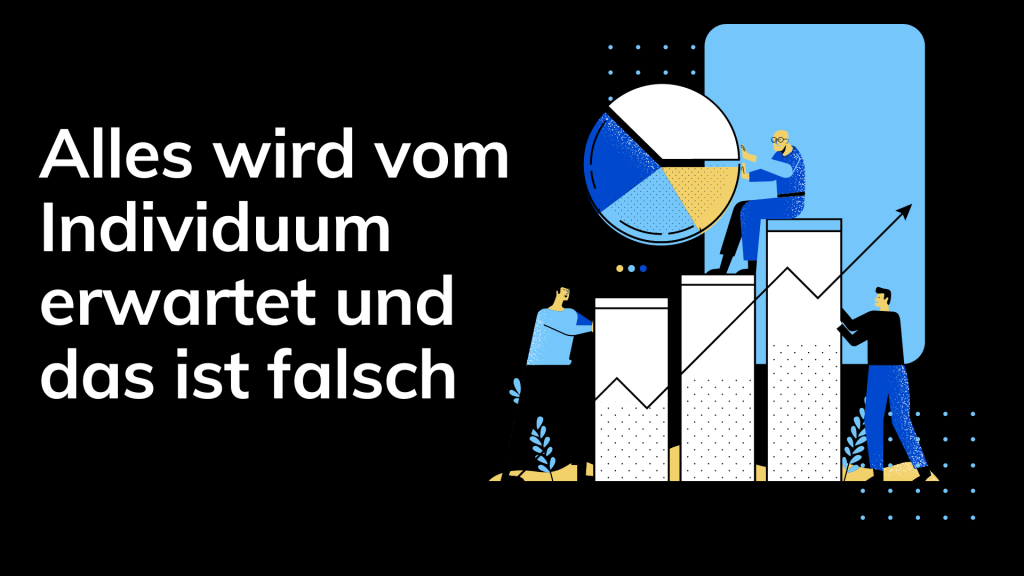
Mehr als je zuvor wird Viel bzw. alles vom Individuum erwartet. Jeder ist “seines eigenes Glückes Schmied”. Charisma, Erfolg, Leiterschaft, soziale Fähigkeiten und Einfluss sind alles begehrenswerte Dinge unserer Zeit und damit werden erfolgreiche Menschen beschrieben. Aber trotzdem liegt die größte Macht in der Zusammenarbeit einer Gruppe. Der Stamm kann alles verändern. Der Zusammenhalt einer Gruppe führt zu großen Änderungen. In der Gruppe können Krisen überstanden werden und Ziele werden erreicht. Die Kraft der Gemeinschaft ist ein Kennzeichen menschlichen Lebens. Der Mensch ist das einzige Lebewesen welches in großer Zahl flexibel kooperieren kann. Im Tierreich gibt es viele Beispiele dafür aber ihre Kooperation ist nie flexible. Durch die flexible Zusammenarbeit in großer Zahl kann der Mensch die Welt beherrschen. Er kann Wolkenkratzer und gotische Kirchen bauen. Er kann zum Mond fliegen und Roboter auf den Mars bringen. Aber das hat auch seine Kehrseite. Der Mensch kann damit auch versklaven, alle Lebewesen dieser Welt beherrschen und alle Ressourcen ausbeuten. Er kann die Welt erobern und auch andere Menschen unterdrücken nur um etwas “mehr” Macht und Ansehen etc. zu erhalten.
Als Pfarrer und Leiter habe ich das große Privileg die Kraft der Gemeinschaft innerhalb der christlichen Kirche zu erleben. Das Engagement von Ehrenamtlichen. Die Zusammenarbeit im Blick auf ein großes Ziel. Die Kooperation an einem Projekt, an einem Gebäude, in der Diakonie oder allgemein Nächstenhilfe. Natürlich braucht es zunächst die Bereitschaft der einzelnen Person, das Individuum welches Verantwortung übernimmt. Das gibt auch dem Einzelnen ein Gefühl von Erfolg und Zugehörigkeit. Aber es ist die große Gemeinschaft die große Ziele erreicht und Erfolge feiert.
Das Christentum hat darin bestimmt kein Alleinstellungsmerkmal. Es gibt auch andere Religionen und Bewegungen oder vielleicht Unternehmen in denen die Gemeinschaft wichtig ist. Dem Vereinswesen ist dieses zentral wichtig. Im Christentum ist der entscheidende Unterschied der, dass Partizipation nicht nur erwünscht wird sondern eine Grundverantwortung des Individuums darstellt. Aufgrund dieser Gedanken bleibt nur eine Frage: Was ist das große Ziel? Was ist der Grund? Das Warum der Gruppe bzw. der Gemeinschaft? Was machen wir mit unseren unglaublichen Superkräften die uns zu den Sternen führen könnten und den Planet verändern lassen? Die Frage ob wir teilnehmen sollte steht nicht Debatte. Wenn wir nichts tun dann nehmen wir auch teil und gehoren zu der Gruppe derer die sich nicht einbringen, zu den Gleichgültigen.
Wir lassen uns von allem Möglichen ablenken. Wir werden manipuliert und um unsere Aufmerksamkeit wird ein harter marktwirtschaftlicher Kampf geschlagen. Viele Menschen leiden an “Langeweile” an “Ziellosigkeit” und den Folgen die daraus erwachsen. Und dann wird andererseits viel zu viel vom Einzelnen erwartet bzw. dem Einzelnen zugeschrieben. Influencer und Stars, Pseudowissenschaftler und sogenannte Experten findet man heute auf allen Kanälen und in allen möglichen Ecken und Gasse des Internets. Etwas mehr Bescheidenheit bitte! Vergessen wir nicht wo die wahre Macht, Einfluss und Superpower liegt undzwar in der Gemeinschaft. Ich plädiere dafür mehr für die Gruppe als für die Einzelnen zu jubeln.
Und ich möchte diese Idee weiter vertiefen. Mit euch möchte ich unglaubliche, unerreichbare, weltumfassende und menschheits -verändernde Ziele finden welche die flexible Kooperation in großer Zahl benötigten um erreicht zu werden. Wenn du die Welt positiv verändern willst dann kannst du das in dem du Verantwortung als Mitglied einer Gruppe übernimmst. Es gibt einige solcher Ziele die Organisation wie die UN oder das IPCC (The Intergovernmental Panel on Climate Change) identifiziert haben. Welches sind die besten und größten und effizientesten Hilfsorganisationen? Wo kann ich mic ham sinnvollsten einbringen? Und weiterhin, wie können diese Ziele erreicht werden? Egal wie hoch oder groß oder schwer so ein Ziel ist zusammen, als Gemeinschaft, in der Gruppe können wir alles erreichen. Dafür setze ich mich gerne ein. Es ist unglaublich motivierend zu wissen, dass die Dinge und die Verantwortung die ich in einer großen Gruppe übernehme im großen Kontext, die Welt positiv verändern. In religiöser Sprache würde ich das so etwas wie Reich Gottes nennen an dem ich mitarbeiten darf aber du kannst es auch einfach flexible Kooperation in großer Zahl für ein objektiv positives Ziel, nennen.
Dieser Satz will dazu motivieren: Alle können alles von überall und zu jederzeit erreichen wenn sie zusammenarbeiten.
















 Peter Demuth