
Subscribe to continue reading
Subscribe to get access to the rest of this post and other subscriber-only content.

Welcome / Hallo / Bun venit / Bem-vindo / Szívesen látlak

Subscribe to get access to the rest of this post and other subscriber-only content.

Here is what I learned
Writing is hard! Speaking in public is a nightmare!
Yet it’s something everyone should learn and everyone should do.
That’s all feelings every writer and speaker makes. But it’s doable. I would argue that it’s a life skill—something we never finish learning. So I wrote and gave a speech a week for 13 years. Here is my experience.
Author, psychologist and speaker Jordan Peterson says about writing: “People who spend time writing carefully about themselves become happier, less anxious and depressed and physically healthier. They become more productive, persistent and engaged in life. This is because thinking about where you came from, who you are and where you are going helps you chart a simpler and more rewarding path through life.”
This passage speaks to me and reflects my own experience in so many ways. Yet writing is so hard. It requires so much effort, concentration, energy and thought.
It is hard to know the grammar and write correctly.
It’s hard to express thoughts.
And I often wonder how many people have this habit? Do people do that: Sit and write?
If not, it would be the most critical thing we can start doing right now. How many personal stories, how many insights, how much knowledge and life experience just remain unspoken and unheard. Everyone has a story to tell. And there is something to be learned from each experience. We have the technology to write and, most importantly, make everything searchable. We can capture and organise human knowledge for the next generations. And I think we should. In addition to that, the personal benefits of writing are obvious.
Writing and holding a speech are not the same but very similar. Learning what I wrote and remembering what I put to paper happens through speaking it out loud. Holding and giving a speech is an entirely different beast of a job equally complex. Combining them, in my experience, is helpful.
Of course, not all writing is intended for speech because writing a speech is different from writing for someone who will just read it. But, having to give an address force you to write even when you don’t want. It forces you to finish the script, the speech, the lecture, and the thought that otherwise might not be finished.
Since I started to work as a minister of religion, I had to do both, frequently more than just once a week. I was writing for different publications in different formats. Sometimes more academic, journalistic or reporting about an event. Other times I was writing a thoughtful speech to touch hearts and minds. In my case, this never came to me easily—neither the public speaking part nor the writing.
I remember at school; I was terrible at both. And for a long time, I had a problem with it. Some kind of imposter syndrome. But putting myself into a particular setting gave me the necessary boundary to keep doing it, repeating it and getting better at it. So that is my number one thought of this video:
That’s one of the most important lessons. You will if you have to. Often there is a different pressure involved. It’s very different when I have a deadline and need to write or finish something versus I want to, and it would be nice to write that story. So, if you wish to be better at writing and speaker, say “yes” to opportunities to do so. There are so many ways you could do that. Volunteering is a great way. Volunteer to write an article in your community group, the internal newsletter, or your local publication. And say “yes” to speaking opportunities. Not to show off, network and get something out of it other than simply giving the best speech you can. At a birthday party, wedding or family celebration. How often is there an awkward silence when the question is asked if anyone here would like to say a few words?
Having a deadline is essential too. Writing a speech a week was, for me, a process. It became a habit. That’s the second thought. Make a habit out of writing. In my case, every week. In your case, it could be a weekly newsletter. A weekly video. A weekly meetup. Whatever it is: It has to be regular. Because if it is, we form a process around it.
In make case, at the end of the 13 years, I had a clear structure for the week: Around an hour a day for Two- Three days, read around the topic I was supposed to talk about, making notes and doodles. Another day of more intense research and one day of writing the speech. Rehearsing one day and giving the address the next day. The dream. Of course, sometimes it was not like that. Other commitments made it hard to keep that structure, but I still would aim for it. It was the result of a long learning process I am sharing with you.
During those 13 years, I had all kinds of experiences. I remember once writing and finishing a speech an hour before my speaking engagement. Packing up, rushing out and when I got there, opening my bag, I realised I did not have that speech with me, it was in the printer. Total blockage. Blank slate. What did I write? What did I want to say? I did not rehearse it. I did not read through it a second time, nor did I memorized any of the points. Horrible.
I gave the speech, and it was not good. But an experience like this ends up in a meaningful conclusion. I will never put myself in that situation again. Embarrassing!
Other times, I lost pages or got the order wrong after it fell on the ground. I read quotes I did not understand. Or I did just read and did not hold a speech. I am terrible at grammar. Yet many mistakes can be omitted and jotted out if you carefully read through a few times.
At the end of it, I never felt like I’m done. I am NOT great at writing and speaking. But, for me, it feels somehow just the same. I am still excited when it’s time to hold a speech. I still think the article could be better, or it’s not done, or it has mistakes I did not see or is not good enough.
I could do better.
Frequently I am still not happy with the outcome. But I have a deadline. I have Nr. 1. Set the scene. And I have an Nr. 2 Habit that helps systematically. That’s what I learned from a speech a week for 13 years. Set the scene and build a habit. Make it necessary for you to write and to speak, and that’s how you keep consistent, get better and improve over time.
Check out the Video based on this script:
“Everyone can make it.” “Work hard enough and you will be successful.” “And if you are not successful you did not work hard enough.” That’s how most people think. But this thinking brings forth a problem called the:
This is the tendency of winners to be too proud of their success. To forget the luck and good fortune that helped them on their way. “It’s the conviction of those who land on top that they deserve their fate.” That there is no other reason for their success other than their hard work. This is of course not true. There is always a bit of luck involved and circumstances we have no control over like: time, location, education, parent wealth, physical health etc.
By implication, according to the meritocratic hubris, those on the bottom deserve their fate. It’s solely their wrongdoing and their fault. They did not work hard enough, they did not make it. They deserve it. “The idea that everyone is exposed to a certain kind of fate, by the grace of god or sheer luck makes room for compassion. A perfect meritocracy banishes all sense of gift or grace or luck; it diminishes our capacity to see ourselves as sharing a common fate. And so, it leaves little room for the solidarity that can arise when we reflect on the contingency of our talents and fortunes.” This is what makes merit a kind of tyranny.
Based on the book, the Tyranny of Merit by Michael Sandel, who teaches political studies at Harvard University, we uncover many causes for the current state of democracy. As we are in an election year here in Australia but also because of the challenges to democracy posed by the pandemic and the rise of political partisanship, we need the identify the problem and find achievable solutions. What’s the future of democracies? For Sandel it is a future in which we have:
equality of opportunity in a democracy of humility.
Equality of opportunity you might think is already part of our society. But if you look closer it’s not. Over decades people from different economic backgrounds have less and less common ground. They live in different suburbs, go to different schools and have different cultural, educational and financial possibilities which in turn creates a sense of disconnection. Although free democracy promises equality of opportunity in reality this is less and less true. Children from lower-income families do not have the same opportunity as others who visit elite schools and enjoy private tuition. This hopelessness creates in return frustration and resentment. “Why try when failure is certain?” Recent developments show for example that children in the USA will be worse off than their parents. Just as in Australia most young people can’t afford to buy a house like their parents realistically hope to be able to do.
In human history, there was always a gap between the rich and the poor. The kings and noblemen and the peasants and common folk. But, even that gave room for humility and compassion. Because the rich knew they were born into it and the poor had to live with their fate. In a meritocracy, there is no room for compassion because the poor are poor because of their own fault and the rich can feel entitled because it’s their earned right.
“Seen from below, the hubris of elites is galling. No one likes to be looked down upon. But the meritocratic faith adds insult to injury. The notion that your fate is in your hands – that you can ‘make it if you try’ – is a double-edged sword, inspiring in one way, but discriminatory in another. It congratulates the winners but denigrates the losers – even in their own eyes. For those who can’t find work or make ends meet, it’s hard to escape the demoralizing thought that their failure is their own doing – that they simply lack the talent and drive to succeed. This gives rise to a politics of humiliation.
It combines resentment of the winners with nagging self-doubt. It’s a potent ingredient in the volatile brew of anger and resentment that fuels populist protest.”
To reinvigorate democratic politics, we need to find our way to a morally more robust public discourse; says Sandel. “One that takes seriously the corrosive effect of meritocratic striving on the social bonds that constitute our common life.” “If the common good can be arrived at only by deliberating with our fellow citizens about the purpose and end worthy of our political community, then democracy cannot be indifferent to the character of the common life. It does not require perfect equality but it requires that citizens of different walks of life encounter one another in common places. It leads to a more generous and compassionate society where even those who are not fortunate enough, who do not make it, have a place to live and be heard.
Is that a good solution? Is that a way forward? And if it is, in which political Agenda and which political party do we find this proposition. And if we do not find it how can we influence the next government and politician to devise the necessary policies? What would be the alternative solution?
Source: Tyranny of Merit by Michael J. Sandel
Check out the video linked below for more information about this topic.

Consumerism is bad. Consumerism is “the idea that increasing the consumption of goods and services purchased in the market is always a desirable goal and that a person’s wellbeing and happiness depend fundamentally on obtaining consumer goods and material possessions.”
On the one hand, it’s a driving force of the need for economic growth and, on the other hand, the reason for pollution, waste, and slave workers all around the world. So, why are we not happy with what we have? Or happy with less? Less clothes, less stuff, less shoes, less food, less. If you live in a wealthy country, you live in the one per cent wealthiest societies worldwide and history up to this point, yet, the more we have, the more we seem to want.
I think 1. It has some evolutionary symptoms and reasons. 2. It’s because we are influenced by marketing.
In his book “Humankind” Rutger Bergman writes that we would be willing to do something we would instead do something we know is bad and against our values to belong and be part of the larger group.
That’s a great tip—a bonus one. Seeking friends and surrounding ourselves with people we look up to will help us become better. A statistic says that we are the average of our friends, good and bad.
2. The other reason is the genius of marketing. And in our days, it is, to be very precise, social marketing. Social Marketing is the influence other people have on us and our decision to purchase a product or service. The biggest Brands in the world basically outsource their marketing to online creators. A new kind of job is created and a new kind of marketing is practised: “The casual looking consumer on youtube makes videos about his or her favourite toys.” At least it started like that. Now it’s a job. Creators live from that and if they know it or not behind their well-meant “honest review” lies the ugly truth of social marketing.
In the age of social media and social influencing, this has a deep impact on us personally and as consumers.
On youtube, it’s particularly challenging. Because here we have a mix of sharing our personal lives and business model. Which is basically to be an appealing, nice, interesting, engaging personality that connects with different audiences sharing what companies send them either for free or with some requirements.
That’s why Youtube can be so dishonest. And I say can be, because many YouTubers are aware of this problem and know that the audience sniffs out dishonesty. So there are some checks and balances but are they enough? Is it obvious enough? Is it clear enough that some videos are simply advertisements? From my own experience no. It’s not. And creators try to do the bare minimum required by law or not even that. Even if creators mention that they are sponsored or that the product they review has been sent to them is that enough? I think not for the ultimate goal to influence the audience into being interested or buying that product.
It happens pretty regularly to me. And I am sure it happened to you too. Suddenly I want to buy something. I have this urge. It’s like an itch. I need it. I need it now, and I need it badly. After reviewing for four weeks or even months that particular product, reading articles, and watching Youtube videos, I now made the decision and want it badly. From where does this thought come from? Maybe just out of nowhere. But perhaps this longtime influence I am exposed to by watching Youtube about products, etc., suddenly comes to the surface. I am influenced. Even the whole setup of having different cameras, laptops, and phones like YouTubers do, is because they are working with those products seems to be expected.
It’s too late. I want it. And I want it bad. And I want it now. “If you don’t have it in stock, I would rather drive to a shop 20 km down the road. That’s how bad I want it.”
Now, by all means, I wish all Youtube Creators all the best in finding good sponsors and products they believe to market for them, but I also highlight the problem and the challenge with it.
What is the future of marketing and advertisement? Will all human interactions become some sort of influence? Will every conversation, every discussion, every interaction be some sort of transaction of intangible value or influence towards a sales pitch?
Interested in the Youtube Video version of this article explore press the link below.

It was in my late twenties when I tried to journal regularly. I tried a couple of times in my youth, and later too, who didn’t, but I never kept it as a regular habit. But why is Journaling so much praised? There are millions of Videos, Blogpost and Methods all praising this “waste of time.” Or is it not?
What is Journaling?
It depends on what you mean by it.
Definition:
“a book in which you regularly write about what has happened to you.”
That sounds like a diary, writing something every day about the day. That sounds boring, doesn’t it??
For other people journaling, even though it’s regular in some way, does not have to be daily.
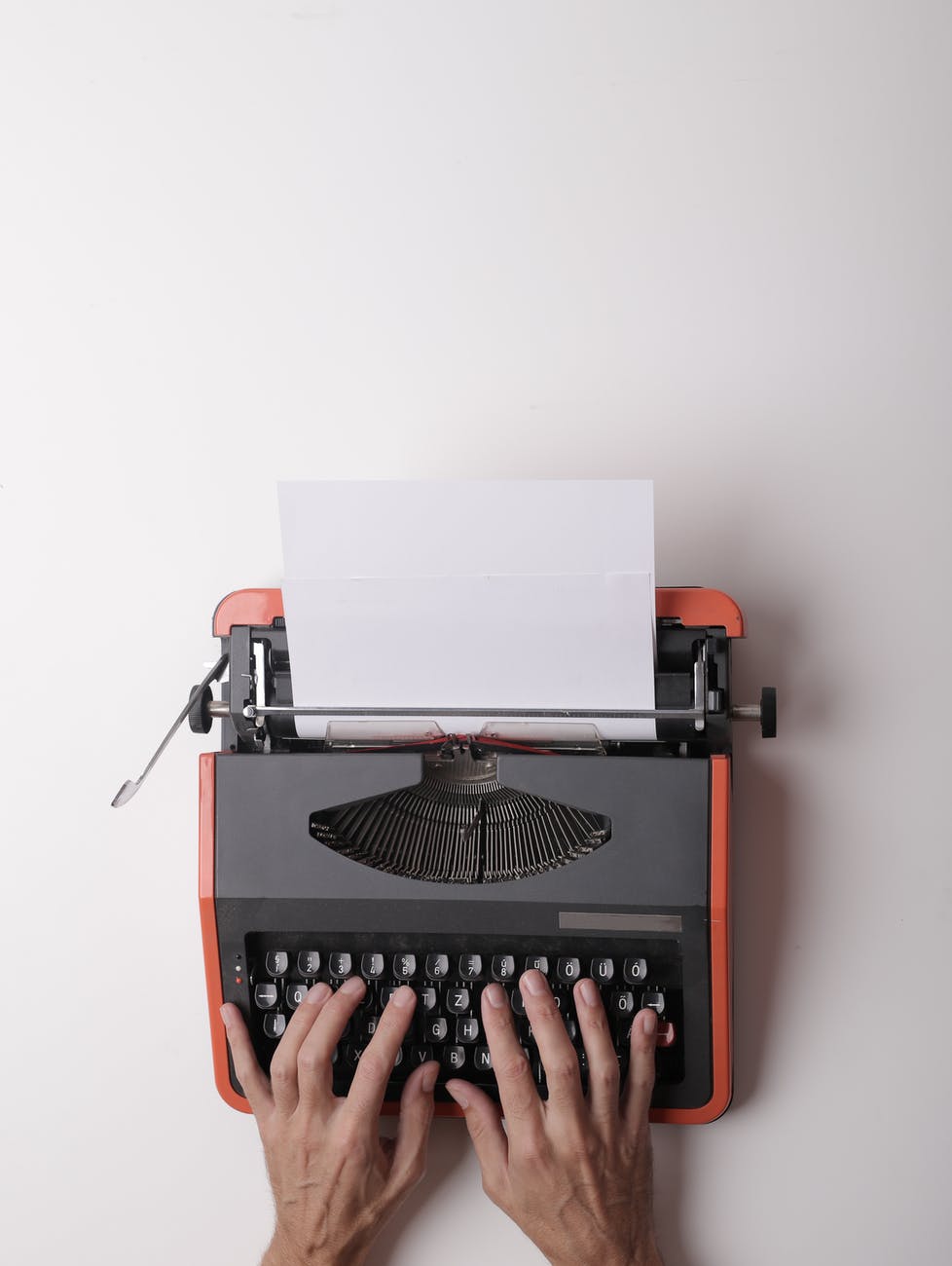
And its always about writing:
Journaling, for me, is not the same as notetaking. And it’s not the same as Taskwriting, but who am I to say what Journaling is.
I can’t even follow my own aims. Because in 2010 and 2011, I started out, due to my work and experiences to think and research Journaling and incorporate it into a routine.
Hearing about famous authors like Hemingway or Mark Twain who were fervent writers or should I say journalers, was also a motivation to start writing.
But then I started to use my journal for everything, for notetaking in meetings and conversations.
From there, I always mixed it up with digital Journaling. Taking out my phone, if I don’t have my other stuff with me, is life-saving. Or, I am writing on my Laptop. I write at least 20 times faster than by pen and paper and fill pages like a champion journalist.
Then there are other mediums for Journaling. I was taking photos in a digital Journal. Or voice notes.
But there is something special about the analog medium. I think it helps you not be distracted, and it helps your writing process by giving you more time to consider what you write when you write.
It’s incredibly challenging to find the right tool. So I am here to help you not make the same mistake.
Just keep one journaling app.
Tweet
No matter what, don’t change to something else. And if possible start with something free.
Really. Stop looking for the perfect app and stick to one. The advantage of having everything in one place rather than moving around and losing half of your stuff is more important.
And use Pen and paper in addition to that. The thought process is just different, and you should allow yourself to experience both.
In my opinion, sorry to all those who are making journaling their life task, Journaling helps you understand yourself better and to keep the focus on the big questions, tasks and people in your life.
You are not journaling for the sake of it. Or to have the nicest journal possible. Now by all means, if that’s important to you, do it. But for everyone else especially those wanting to start out with Journaling that’s, my advice.
You journal to understand yourself better. And focus better.
If you think you just have a good memory and you will remember what’s important and how you felt, you are mistaken. Your mind is one delusional friend of yours who is constantly making sense of the world and who keeps feeding you all kinds of stories. By Journaling, you will trick your little friend, especially in the long term, because your memory does not really work well. Your memory only retains big, bold things, dangerous things and just bins the other stuff. Journaling also helps you rediscover how you thought and why you did something in that specific why.
Now that we know why we journal, we can talk about the HOW, the method. And I just have three tips:
Let me know your favourite tips on journaling? What’s your preferred medium and how do you journal?

Let’s discover five things we can do to make better decisions and avoid decision fatigue
Did you hear about decision fatigue? I came across this formulation a long time ago, and I always asked myself if it was true. Do we get fatigued because we make too many decisions? It’s not like our mental power would run out. It is not like we could not go on to make decisions, or does it?
Yet, there are so many easy examples that come to mind which illustrate this point.
Think about:
That’s called the paradox of choice. The more options we have, the more difficult it becomes to choose and be happy about it. We fear making the wrong choice and are not satisfied with whatever choice we make.
Perhaps we can think alongside Daniel Kahneman’s ideas from his book “Think Fast and Slow” one of whihc is: we do many things in an automated. We spend almost all of our daily lives engaged in System 1 (Thinking Fast). We engage System 2 (Thinking Slow) only if we encounter something unexpected or make a conscious effort.
To avoid decision fatigue, we need to have good habits and systems. I think this fits perfectly into this idea of dealing with most of our time and tasks and aspirations through habits and systems. Not relying on our willpower, not on intention, not on a decision, may it be conscious decisions or decisions we make unconsciously, even worse. Habits and Systems take away a lot of unhealthy mindlessness. Of the chaos of our brains and keep our inner procrastinators at bay.
We automate things in our lives so that we do not need to make decisions about those things. (for example, A LIST GOOD HABITS). We spend most of our time, System 1, in a well prepared, organised system of intentional habits that lead us in the direction and future we want to rather than the one we might end up in by chance.
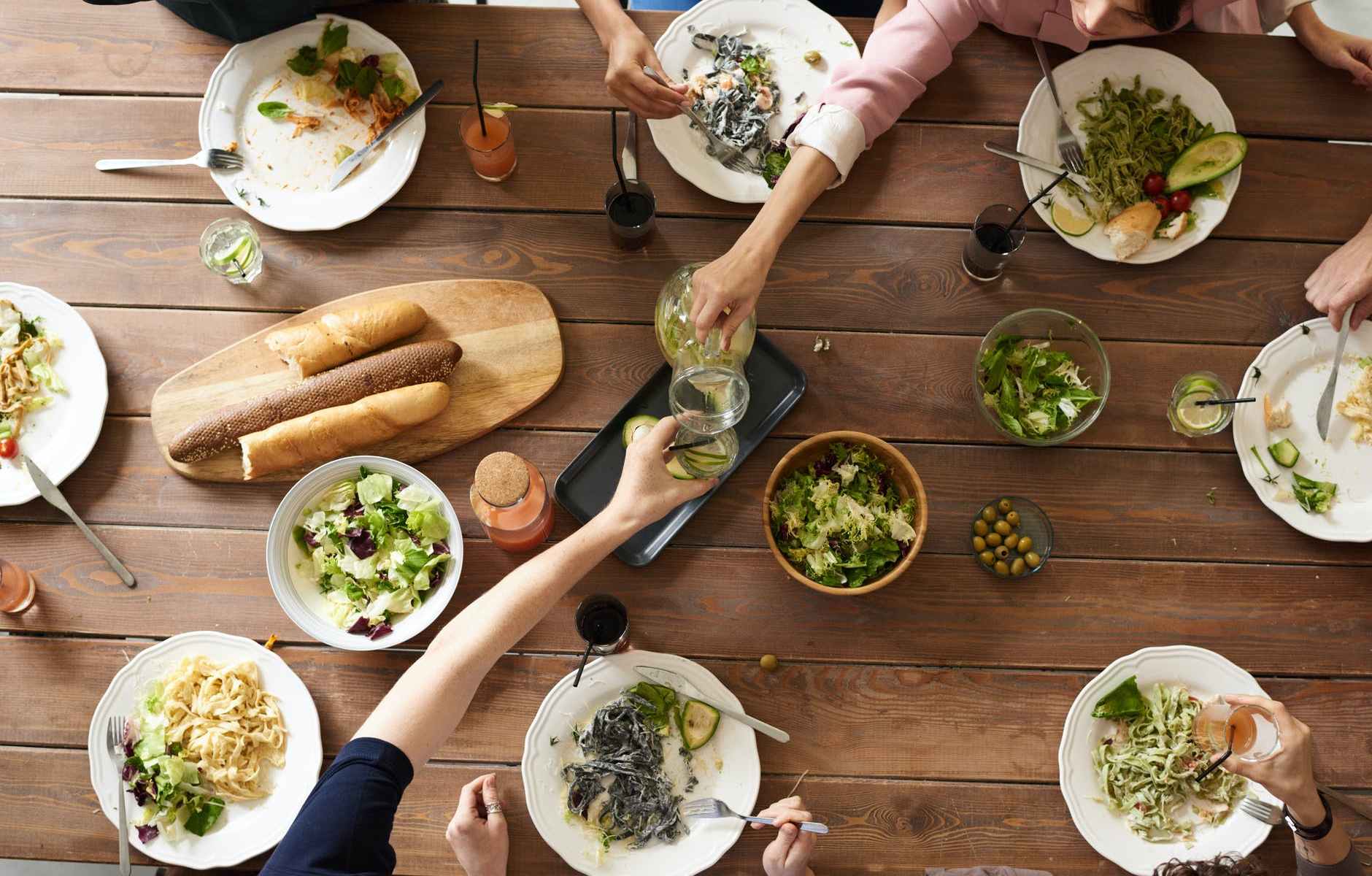
From birth until death and in-between there is this time called life and the question is how should we live a good, meaningful, healthy life not only for ourselves but also for the people and the environment around us? In this article which you can watch as a video, we explore some simple healthy habits and systems that help you make better choices in regards to food and nutrition.
Thinking, speaking and talking about everything that is important to live a good life, nutrition needs to have its place. Even if I am not a nutritionist, I am not a health professional (although that’s in some sense debatable), I need to tackle these issues. If not for you then for me. I rely on my own experience and on literature to find useful information and share something that is helpful. It should be helpful even if you don’t have time to read or watch, but just are scrolling through.

It’s there because in our times there is a censorship on everything that we can’t agree upon together. Nutrition is one of these topics. We are so polarized that we can’t even talk about food. No matter what we say, there will be a different opinion. No matter how healthy, clean or organic the food advice might be, someone will have a problem with it and will be offended by it. If I recommend a carrot, there will be someone having a problem with it. It feels like opening a box, starting a discussion about something that seems nice but will be the source of all evils. Pandora’s box of nutrition – organic, healthy, bio, local, raw, free-range, fresh, cooked, preheated, pre-cooked, frozen, only meat, less meat, no meat, lifestyle, religion, related, hated, climate problem, killing, factory meat and production.
But I dare to open it not only because I know that currently there are just a few people reading this so the danger is not as high, yet. I do it because I think it can and will be helpful. It’s at least helpful to me, bringing order into my thoughts and views about this topic.
In “Humanology”, Luke O’neill has a chapter about this. In his second book after giving a long and in-depth insight into the topic of nutrition, how the body works and what kind of genes might have an influence on how we digest and store or burn certain foods, he comes to a simple but powerful conclusion: Eat less and exercise more.
Of course, we can add to eat a balanced diet, a lot of vegetables and grains, some meat although due to climate change and food production, no meat might be the ethical choice. Perhaps the conclusion would be: Eat less and eat balanced. But less is important. Because most of us today eat too much. There is too much food. Such a privilege. And we are animals from a time long gone driven by instincts and desires. How can we control ourselves in such a context? Eat less. No, you won’t die. You won’t get sick. You will not fall off your bones. You are much better equipped to survive with less food than with lots of it. Just eat less. And keep your diet balanced.
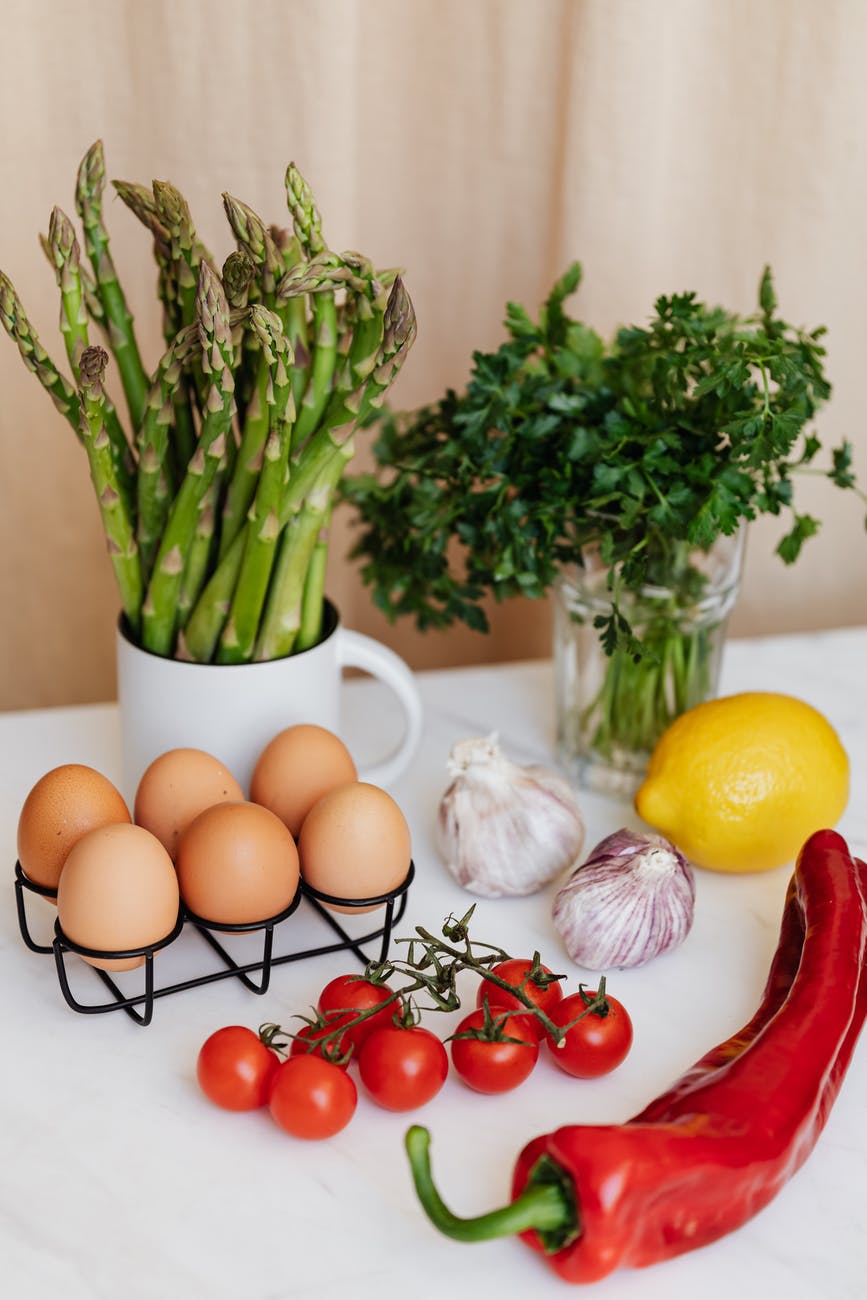
And stop eating anything that comes in a package and is precooked, ready to eat or readily digested food with who knows how many conservatives, preservatives and chemical treatments inside. It is not normal that you can eat that food even in 25-years because it is never going bad, isn’t it? No. The better choice, eat as much raw food as possible. And the food that needs cooking should be cooked by you, preferable right before you eat it.
I think that this simple way of thinking about nutrition will make it easy for you to choose what you eat.
Next time when you go to a Supermarket just skip 90% of the raws and lanes and stay in the area where the fresh food is. Buy some veggies, buy some fruits and grains, perhaps some fresh meat, from a local farm and that’s it. You don’t need to satisfy your curiosity by exploring all other lanes. What’s there is not for you! Only modern poison. Because you eat food as raw and fresh and local as possible.
Hope these tips are helpful. And until next time when we open Pandoras Box of Nutrition advice.
Need more Information? Check out these videos:

The News channels were bragging this week about how many millions of dollars people spent in just a few days after the Lockdown. Hundreds of millions of dollars for haircuts, beer, who knows what else. That made me think.
At least it feels like that. That people are out of Lockdown, and now they can fully be what they are supposed to be, consumers. Now, at last, you can shop again. What a fantastic freedom day. People lining up everything, waiting in loooonnnnggg queues and lines to what? To get a pan? To buy a broom after three months, they couldn’t wait any longer. To get some new socks?

Let’s celebrate,
Let’s start the shopping party,
We are free!
How ridiculous is that?! The first thing we do and everyone talks about, and everyone wishes for is to go and spend money on things we don’t need wasting time and resources we could use better. Yes, I know we need to support the local economy. But the reality is the local economy needs to change to support us and not the other way around. If we change our consumer behaviour, the economy will change its behaviour. It’s as simple as that! If our values and priorities change, the economy will change too, and everyone will be fine again.
Did we learn anything from staying at home in Lockdown other than discovering our need to horde stuff and distract ourselves from the meaninglessness of existence by mindless roaming around malls and Ailes? Really? Is that the answer? We can get back now and continue to distract ourselves from the fascinating matters with shopping, buying, spending, sitting in bars, and drinking alcohol with others who need to distract themselves too?
Of course, I am happy that the Lockdown is over in NSW. And I am looking forward to the day this will happen in Victoria, which will be soon. But the reporting of this “Freedom” day seems to me so ridiculous. We are now free to leave our homes and what do we do? We go shopping and consuming. Because that’s what lives seems to be about. That’s what we are, customers, shoppers, and clients to our corporate master. We are free to be shopping mall slaves.
I would hope, and I would think that this time in Lockdown gave us some new perspectives. Some new insight into what our lives are about, why it matters that we are here and what we could be back in our societies.
Maybe its not about consumption but connection?
But maybe I am wrong. Maybe all that, all the consumption after Lockdown is just an expression of our desire to connect with others. To meet up and do something together outside of our houses, out there in the unknown with unknown people. We are humans, and humans belong. Perhaps we feel that the battle is won and that now is the time to get back together with our comrades and celebrate the victory over this miserable virus.
Perhaps it’s not about consumption, but connection and connection happen especially through consumption? Is that a fair thought? Is that seeking light in the darkness? Maybe we did miss the friendly faces behind the counter? Perhaps we just missed the chat with our hairdresser? Perhaps we just longed for a conversation with a waiter about the latest News rather than just gulping down our food. Maybe? But maybe not! At least, I hope so.

Tips on what you can do after Victoria’s lockdown restrictions due to the Covied – 19 Pandemic are being eased. Whilst remaining covid safe and thinking about the rest of the world Iout of lockdown means:
Time to celebrate. Time to cheer up. Time to sing and laugh and be happy. Perhaps you are worn out and tired. Or you are angry, grumpy and afraid. Maybe you are worried because someone, here or oversees got sick during this time. Perhaps you lost a significant portion of what you had. You lost your job. Your business suffered. Whatever your circumstances are celebrate even a little bit. Maybe you think that there is nothing to celebrate and that this should never have happened. Think again. These are events of a lifetime. Unprecedented. And for now, there is reason to rejoice. Only if we can celebrate will our achievements have a lasting impact on our heart and minds. For now, we won! Let’s celebrate!
So much is lost. How do we build up again our connections and relationships? How can we do that in an ongoing and Covid Safe way? In an already individualistic and isolating world, the Pandemic has a significant impact on our relationships. After this extended lockdown, you might not feel the need or any motivation or reason to get out again. To connect with friends and your community in church or your club etc. seems unnecessary. But that is just what loneliness does to us. And we are blind to it.
You can do something about it.
Just as connecting with people is high up the list we should do again rediscovering things after we had to spear them for a while is so important for now. Visit places you missed to see. Do also activities you could not do, like hiking your favourite path etc. What is something you want to rediscover? Perhaps after having to spear those things for a while, we see them now from a new perspective and experience them in a new way. Maybe now we rediscover something as being valuable and important to us, and we did not know it until now.
It might be over at last and for now. But it is only a chapter. The Pandemic is not over yet. All over the world countries go through all kinds of situations and scenarios, and we are concerned not only because of the news but because of our connections through families, friends or general interest. For us here in Melbourne, the current situation is a relieve for now. So its time to reflect. Perhaps these next weeks and month will be such a time of reflection on what happened and what it did to us. Here are some questions that might help. Questions I ask myself.
When life gets back a little bit more to a normal rhythm, you have to remember all those things you thought and planned and hope for. Things like:
And of course, I have to repeat this. Celebrate. It’s like celebrating outstanding achievement and do not be mistaken; it is one. In Victoria, we had more than 800 death, and we prevented many more, not only because of Covid but other preventable death. Our healthcare workers are not at their limits, and our hospitals are not overcrowded. There is enough support for everyone who struggles financially and for businesses to get through this. We have a healthy democracy, and we are in a great place, not perfect, but great. And we should celebrate first before we get back to work and before we get worried again about what’s going on in our world. Cheers.

I promote genuine curiosity and interest in other people. I want to encourage conversation for the sake of interacting with someone else.
Why does almost everyone today, especially those who seem to be friendly, interested and motivated in conversation have a Hidden Agenda in the sleeve that’s pulled out once you are hooked in a seemingly genuine conversation?
There is nothing more frustrating and disappointing than having that AHA moment during a talk with someone: “Aha, that’s why you invited me to lunch?” Do you know those surprising moments? “Aha, and all this just for asking if I can…” It’s so disappointing! “And I thought this friendly person was just interested in having a discussion, how stupid from me.”
Why can’t we have a genuine conversation? A conversation without the hidden Agenda. One without a secret product in the pocket and every so important marketing for the “Me” business.
It seems that the interaction with other people today has become a charade of friendliness disguising our real intention to sell something to a possible buyer. It feels to me like being on a real-time Market-platform, Amazon in real life, where everyone is trying to pitch you something.
Networking, the exchange of information and ideas among people with a shared profession is conquering all conversation. Its exactly that, having “an agenda” and finding a fancy justification for it. Why do all encounters have to have an outcome? an aim? Interaction with other people can be based on a common interest or based on a situation may it even just be sharing a waiting room at your GP. You don’t need to advance your Agenda there.
Why not merely having a conversation without a “positive outcome”? Just a talk between two people sharing their thoughts, ideas, feelings or having a discussion about a topic. Not a planned conversation with an expected topic or “agenda” to go through. Do you remember such a conversation? I am sure you do because many of those conversations are important.
With this short article, I promote genuine curiosity and interest in other people. I want to encourage conversation for the sake of interacting with someone else. A real encounter, an in-depth discussion and intention to listen and understand the other person’s perspective.
I am tired of encounters with an Agenda, where I am just a potential client, a consumer or a step to something else for self-gain. Whatever your Agenda is, stop it! Not today. For once, be yourself, without being afraid to be wrong or right. Let us learn from each other and build on ideas. Who knows our conversation can be life-changing.
15th October World Values Day – Dialogue
 Peter Demuth